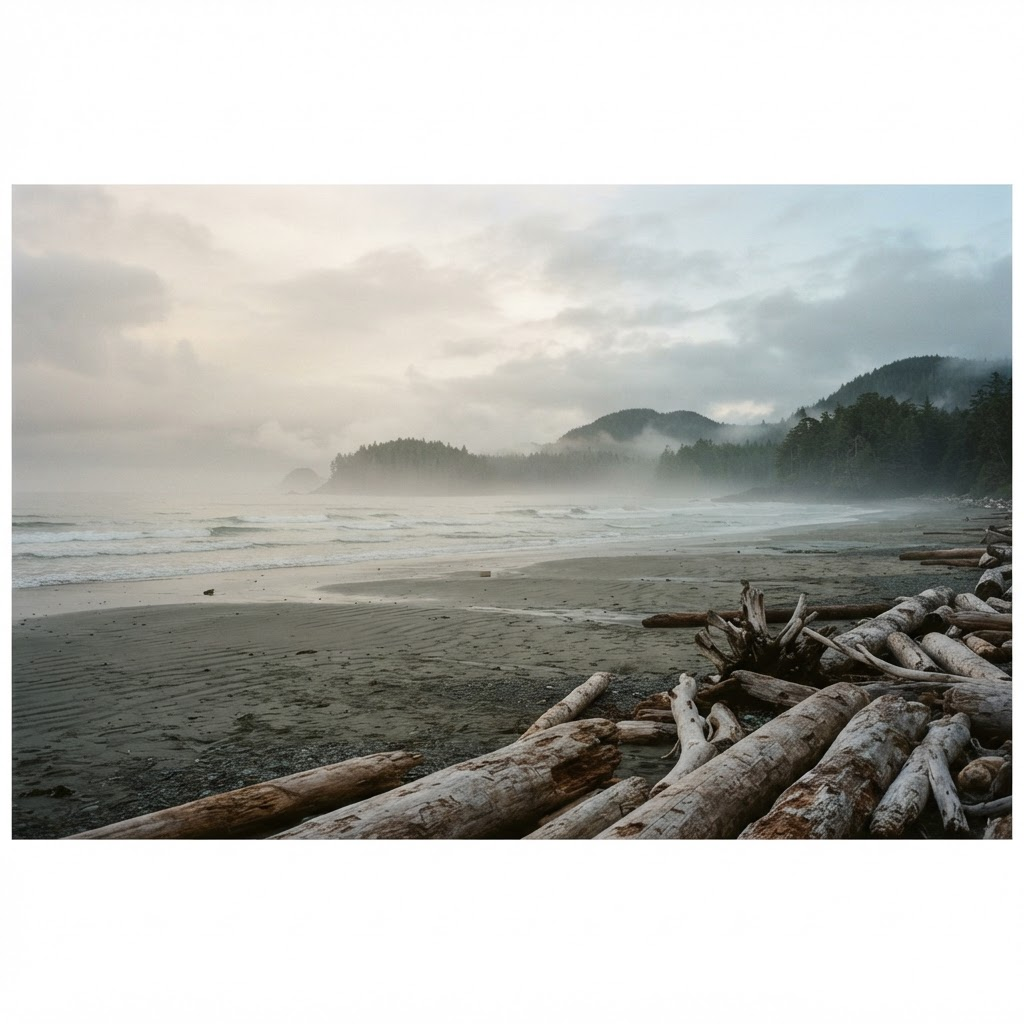
It will rain. Here is how to plan a wedding that is better for it.
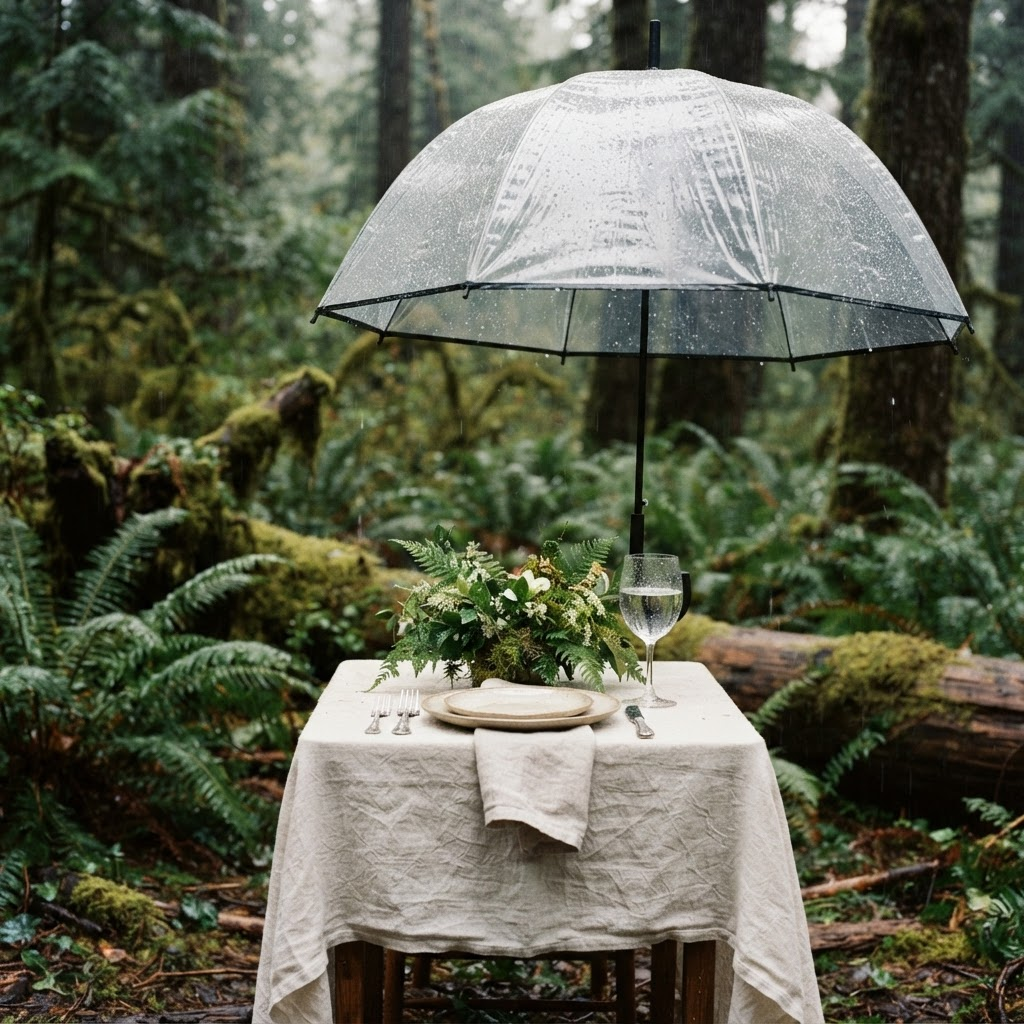
Every couple who marries on the coast of British Columbia between October and May asks us the same question in the first meeting, and most of the ones who marry between June and September ask it too. The question is what happens if it rains. Our answer has not changed in eleven years: it will rain, and we will have planned for it so thoroughly that you will be glad it did.
We do not mean this as consolation. The West Coast in rain is the West Coast at its most itself. The cedar darkens. The moss becomes the colour it is meant to be. The light goes silver and flat and forgiving, and every photographer we work with will tell you it is the light they pray for. A ceremony in a clearing under a sailcloth canopy with rain on the roof is a thing your guests will speak of for years. A ceremony in full sun is a thing they will squint through.
The West Coast in rain is the West Coast at its most itself.
What planning for rain actually means
It means the rain plan is not a plan B. It is designed at the same time and to the same standard as the fair-weather version, and in most cases it is the same design with a roof. A tent is not a rain plan. A tent chosen in the last week, erected by a crew who have never seen the site, with a floor that was not part of the design, is a compromise everyone can feel. A sailcloth structure sited in March for a September wedding, with a floor and lighting and heat designed as one thing, is not.
It means umbrellas that are beautiful, in a colour we chose, waiting at every door before the first drop. It means a shoe change for the bride and the bridesmaids and, if he will let us, the groom. It means the ceremony musicians have a covered position and their instruments are insured. It means the photographer has been told where the light will be at 4 p.m. under cloud, which is a different place than under sun.
What to tell your guests
Tell them the truth on the invitation. Tell them it may rain, that the wedding will be held outdoors regardless, and that they should dress for it. Guests who have been told will arrive in wool and good shoes and will be delighted. Guests who have not been told will arrive in silk and will be cold. There is nothing you can do for them at that point except hand them a blanket, and we will, but it is better that they knew.
And then, on the day, when it rains, go outside. Stand in it for a moment before the ceremony. It is the coast, and it is yours, and this is what it does.